

QiLong Nano blackboards are transformative tools for chemistry education, where the combination of traditional chalk writing and digital interactivity addresses the subject’s unique needs: visualizing molecular structures, demonstrating reactions, and explaining abstract concepts. Their dual functionality—supporting hands-on notation and dynamic digital content—makes complex chemistry topics more accessible and engaging. Here’s how they enhance chemistry teaching and learning:
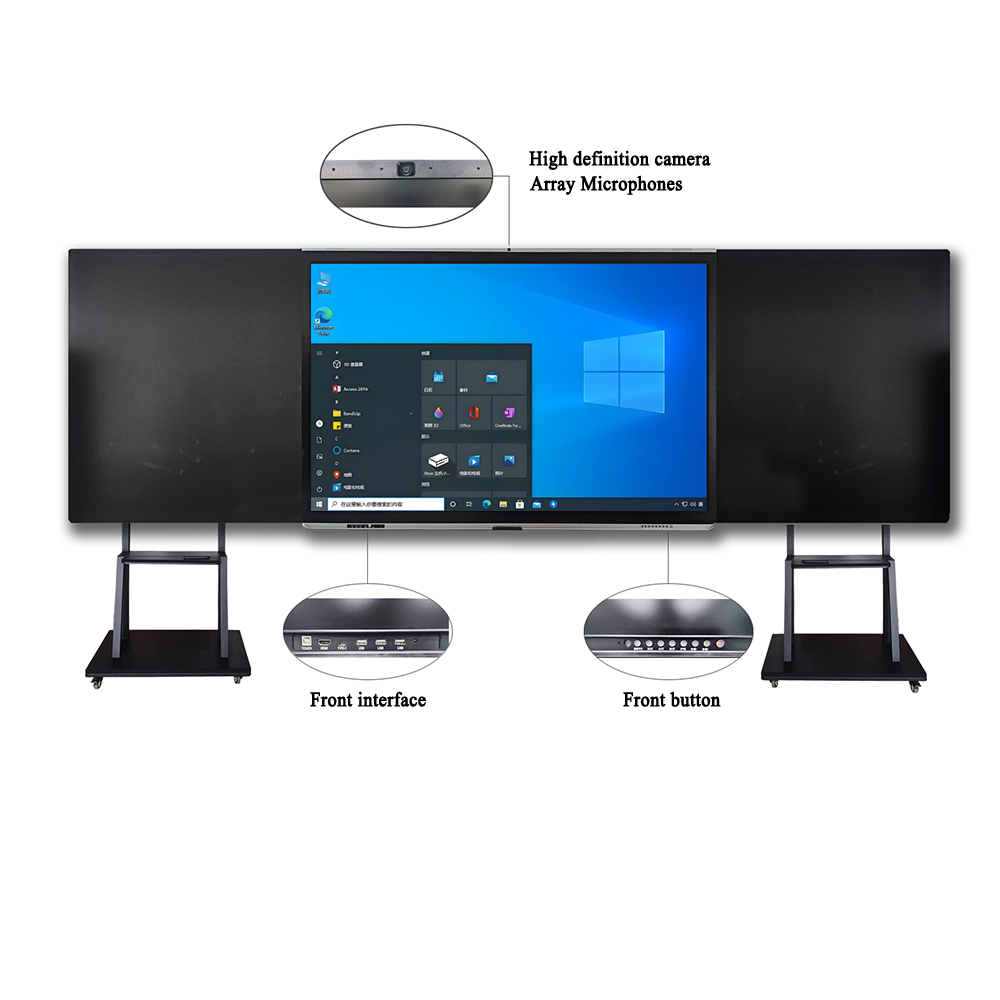
1. Chalk Writing: Reinforcing Core Concepts Through Tactile Learning
Chemistry relies on precise notation (e.g., formulas, equations) and step-by-step reasoning, and chalk writing on nano blackboards preserves the tactile, iterative process that helps students follow logic:
Balancing Chemical Equations: Teachers can write unbalanced equations in chalk (e.g., “H₂ + O₂ → H₂O”) and work through balancing them in real time, erasing and adjusting coefficients as they explain. The smooth, scratch-resistant nano surface ensures chalk lines stay clear, even with frequent edits—critical for students to track each step.
Drawing Lewis Structures & Bonding: For organic chemistry, sketching molecular structures (e.g., benzene rings, peptide bonds) with chalk mimics the “pen-and-paper” practice students use in exams. Teachers can color-code atoms (e.g., red for oxygen, black for carbon) with colored chalk to highlight functional groups, making 2D structures easier to interpret.
Annotating Lab Procedures: When explaining experiments (e.g., titrations or distillations), teachers can outline steps in chalk, adding notes like “use a burette, not a pipette” or “record pH after each drop.” This mirrors how students take lab notes, reinforcing good habits.
2. Digital Interactivity: Visualizing the “Invisible” World of Chemistry
Chemistry often involves phenomena too small (atoms, molecules) or dangerous (explosive reactions) to observe directly. Nano blackboards’ digital mode solves this with dynamic tools:
3D Molecular Models: With a tap, teachers can switch to digital mode to display rotating 3D models of molecules (e.g., DNA helices, water’s hydrogen bonding). Students can even interact with the models via touch—zooming in to see bond angles or pulling apart ions in ionic compounds—to grasp spatial arrangements.
Simulating Reactions: Digital simulations let students “watch” reactions that are too slow (e.g., rusting) or risky (e.g., chlorine gas reactions) to demonstrate in class. For example, a simulation of acid-base neutralization can show H⁺ and OH⁻ ions combining in real time, while teachers use chalk to annotate the reaction’s pH changes.
Data Visualization: After a lab (e.g., measuring reaction rates at different temperatures), teachers can project graphs (time vs. product concentration) on the digital screen. Using chalk, they can mark key points (e.g., “activation energy threshold”) or draw trend lines, linking raw data to theoretical concepts like collision theory.
3. Bridging Chalk and Digital: Active Learning for Complex Topics
QiLong nano blackboard’s true power lies in merging its two modes, turning passive listening into active participation:
Hybrid Problem-Solving: For stoichiometry problems, teachers can write a balanced equation in chalk, then pull up a digital periodic table to calculate molar masses. Students can take turns: one solves the math in chalk, another uses the digital screen to check units (e.g., converting grams to moles), fostering collaboration.
Live Lab Integration: During in-class experiments, a camera can stream the lab setup (e.g., a beaker of boiling water) to the digital screen, so all students see details. Teachers can freeze the feed and use chalk to label components (“condenser,” “thermometer”) or note observations (“vapor forms at 100°C”).
Safety Training: When teaching lab safety, digital mode can show video clips of common mistakes (e.g., improper chemical storage), while chalk annotations highlight risks (“Never mix bleach and ammonia—releases toxic gas”). This combination of visual warning and written reminder reinforces safety rules.
4. Supporting Remote and Post-Lesson Learning
Nano blackboards ensure chemistry education doesn’t stop in the classroom:
QR Code Sharing: After a lesson on kinetics, teachers can generate a QR code with one click, linking to the day’s chalk notes (e.g., reaction rate formulas) and digital resources (simulations, lab videos). Students scan it to revisit material while doing homework or studying for tests.
Remote Lab Prep: If students can’t attend class (e.g., due to illness), teachers can livestream a lesson, writing chalk explanations and sharing digital models in real time. Students can even “raise hands” via chat to ask questions about, say, a confusing redox reaction.
Review and Revision: Chalk notes and digital annotations are automatically saved to the cloud. Before exams, teachers can pull up past lessons—e.g., a chalk-drawn flow chart of organic reactions paired with digital flashcards—to review key topics.
Why Nano Blackboards Excel in Chemistry
Clarity for “Abstract” Concepts: They turn invisible processes (e.g., electron transfer) into tangible visuals, whether via chalk sketches or digital models.
Cost-Effective: A single nano blackboard replaces both a traditional chalkboard and a pricey interactive display, freeing up budget for lab equipment or chemicals.
Durability: The nano coating resists stains from chalk dust or accidental spills (a common lab issue), ensuring longevity.
Engagement: Students are more likely to participate when they can sketch structures in chalk and manipulate digital models—making even tough topics like thermodynamics feel approachable.
Example Lesson: Teaching “Acid-Base Reactions”
Chalk Setup: Write the reaction “HCl + NaOH → NaCl + H₂O” in chalk, labeling acid, base, salt, and water.
Digital Demo: Switch to digital mode to show a simulation of H⁺ and OH⁻ ions combining to form H₂O, with color-coded particles.
Hybrid Annotation: Use chalk to circle the H⁺ in HCl on the digital screen, linking it to the “acid” definition written earlier.
Student Practice: Have students come up to the board—one writes a new acid-base equation in chalk, another uses the digital screen to predict products.
Share for Review: Generate a QR code linking to the lesson, so students can revisit the simulation and equations at home.
In short, nano blackboards make chemistry’s “invisible” world visible, its abstract rules concrete, and its hands-on labs safer and more connected. For a subject that balances theory and practice, they’re not just a tool—they’re a catalyst for deeper understanding.
QiLong touch, founded in 2007, is a high-tech enterprise specializing in the research and development and production of smart campus big data platform and many intelligent products.The company has an industrial workshop of more than 8,000 square meters, with more than 180 employees, including more than 20 product research and development personnel, and several senior engineers at the professor level. The hardware products produced by the company mainly include: interactive tablet, interactive intelligent blackboard, OPS computer, interactive interconnected blackboard, conference tablet, advertising machine, inquiry machine, recording and broadcasting equipment, calligraphy equipment, classroom eye protection lights, etc. With rich experience in OEM/ODM service to overseas customers, Qilong products are very popular in more than 80 countries around the world.