

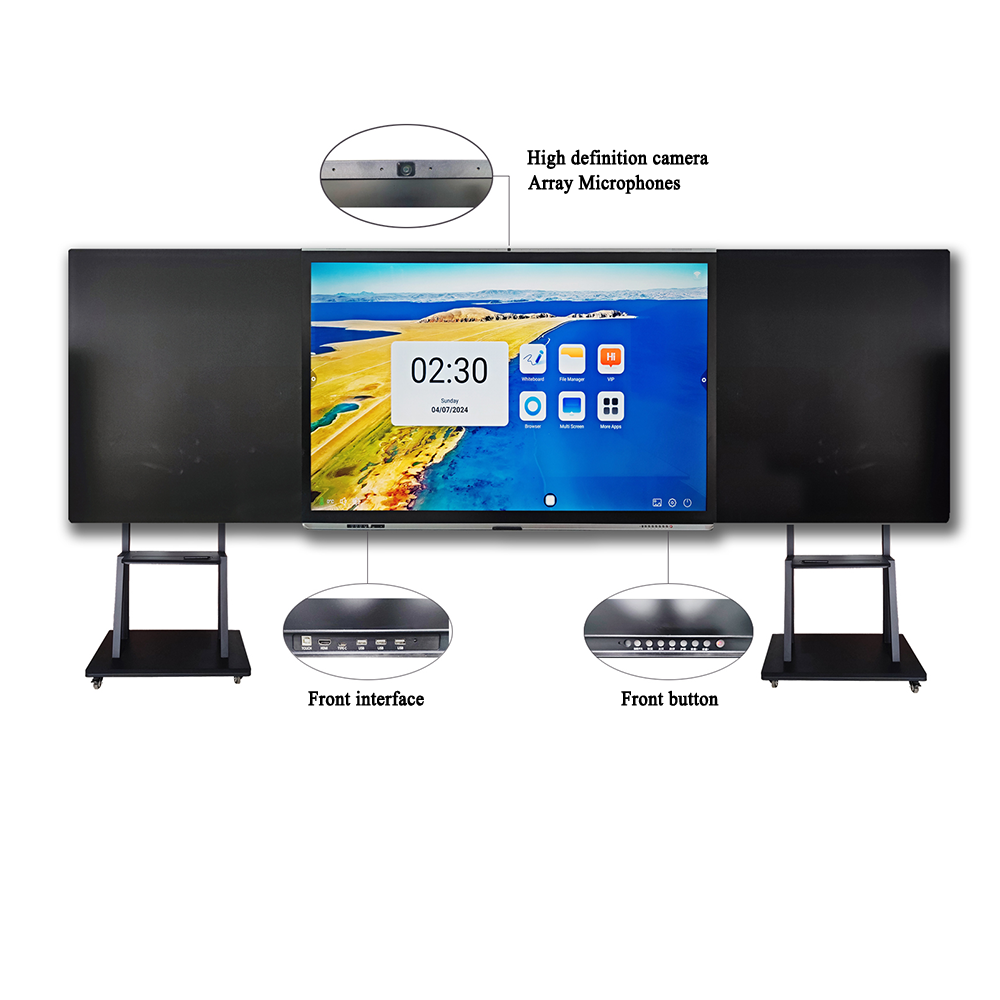
QiLong nano blackboard is an advanced educational technology device that integrates traditional blackboard writing with modern digital features, often leveraging nanotechnology for enhanced performance. Here’s a detailed explanation of its definition, features, advantages, and applications:
1. Core Definition and Technology
A nano blackboard typically refers to an interactive display that uses nano - coating or nano - structured materials on its surface to enable dual functionality:
Traditional Writing: Supports chalk or marker writing like a conventional blackboard or whiteboard.
Digital Interaction: Incorporates a touchscreen layer for digital content display, annotation, and multimedia integration.
The "nano" term often relates to the ultra - thin, anti - glare, or self - cleaning properties of the surface coating, which may be developed using nanotechnology to improve durability and user experience.
2. Key Features and Technical Advantages
(1) Nano - Coated Surface
Anti - Glare and High Clarity: Nano coatings reduce reflection, making the screen visible even in bright classrooms with windows or overhead lights. For example, some models use nano - ceramic coatings to achieve 99% anti - glare effects, similar to matte paper.
Scratch Resistance: Nano materials enhance surface hardness (often up to 7H on the pencil hardness scale), preventing damage from chalk or stylus use over time.
Self - Cleaning Properties: Some nano blackboards have photocatalytic coatings that break down dust or stains when exposed to light, reducing the need for frequent cleaning.
(2) Dual - Mode Functionality
Seamless Switching: Users can write with chalk on part of the board while displaying digital content (e.g., videos, slides) on another section, combining traditional and digital teaching methods.
Digital Annotation Over Writing: Teachers can overlay digital notes, highlights, or images on top of chalk writing, preserving handwritten content while adding interactive elements.
(3) Interactive and Digital Capabilities
4K Touchscreen Integration: Most nano blackboards feature high - resolution touchscreens (55–100 inches) that support multi - touch (e.g., 20 - point touch) for collaborative student interactions.
Built - in Software: Includes educational tools like annotation apps, curriculum resources, and cloud syncing (e.g., saving lessons to a server for later access).
Connectivity: Supports HDMI, USB, and wireless casting from laptops, tablets, or phones, enabling real - time content sharing.
3. Advantages Over Traditional Blackboards and Interactive Displays
| Cost - Efficiency | Cheaper than full - featured interactive displays, as it combines two functions in one device. | Very low cost but lacks digital features. | Expensive, especially for large sizes. |
| Teaching Flexibility | Enables both chalk writing and digital content, ideal for teachers who prefer a mix of methods. | Only supports manual writing. | Relies entirely on digital tools; may require training. |
| Maintenance | Nano coatings reduce dust accumulation and scratches, lasting longer. | Prone to chalk dust buildup; surfaces wear out over time. | Sensitive to scratches; requires careful handling. |
| Environmental Impact | Reduces paper waste (no need for printed handouts) and chalk dust pollution. | Generates chalk dust, which can affect air quality. | Energy - consuming but paper - free. |
4. Applications in Education
(1) K - 12 Classrooms
Blended Teaching: Teachers can write equations with chalk while displaying related videos or animations on the touchscreen, enhancing comprehension for visual and kinesthetic learners.
Student Engagement: Students can solve math problems on the chalkboard area and present digital projects on the touchscreen, promoting interactive learning.
(2) Higher Education and Training
Lecture Capture: Nano blackboards can record both chalk writing and digital annotations, allowing students to review lectures later via cloud - stored recordings.
Technical Demonstrations: In science labs, instructors can write experimental procedures with chalk while displaying real - time data graphs on the digital screen.
(3) Remote and Hybrid Learning
Dual Content Sharing: During online classes, teachers can show their chalk writing via the board’s camera while sharing digital slides, bridging the gap between in - person and remote students.
QR Code Sharing: As mentioned in previous contexts, one - click QR code generation allows students to access digital copies of handwritten notes or displayed content.
QiLong touch, founded in 2007, is a high-tech enterprise specializing in the research and development and production of smart campus big data platform and many intelligent products.The company has an industrial workshop of more than 8,000 square meters, with more than 180 employees, including more than 20 product research and development personnel, and several senior engineers at the professor level. The hardware products produced by the company mainly include: interactive tablet, interactive intelligent blackboard, OPS computer, interactive interconnected blackboard, conference tablet, advertising machine, inquiry machine, recording and broadcasting equipment, calligraphy equipment, classroom eye protection lights, etc. With rich experience in OEM/ODM service to overseas customers, Qilong products are very popular in more than 80 countries around the world.